

Link to workshop:
Jason Livingood serves as Vice President of Technology Policy, Product & Standards at Comcast. He leads Comcast’s efforts in developing & deploying new open standards, supporting applied R&D via collaboration with the research community, engaging with governments, regulators, and other external key stakeholders on Technology Policy issues, and providing leadership on end user product technology roadmaps.
Jason joined Comcast in 1996 to help a small team transition from field trials to launching the high-speed Internet service business. He and a small team of colleagues later co-founded Comcast’s business class Internet services and he’s also been instrumental in the creation of Xfinity Voice, Xfinity Home and Xfinity WiFi. He has held a wide range of roles at the company, including in architecture, engineering, operations, software development, DevOps, and product management.
He also serves as on the Internet Architecture Board and serves or has served in a wide range of other industry technical groups.

This presentation will describe the use case of deep space networking, the key considerations to deploy such a network, and its requirements. It will also describe the current plans of the space agencies and private sector for Moon and Mars deployments. It will then describe the proposed solution. This work is being standardized in IETF by the newly formed working group called TIPTOP (Taking IP to Other Planets). A description of the working group, milestones and current work will conclude the presentation.
Guest Speaker:
Marc Blanchet is president of Viagenie, a consulting firm on Internet engineering. He has been involved in IETF for 35 years, wrote 17 RFC, co-chaired many IETF working groups, including DTN, and was an IAB member. He is the investigator of the Deep Space IP initiative which folded into the TIPTOP working group, where he is technical advisor and delegate. He is the founder of the Space Assigned Numbers Authority (SANA) which does a similar role to IANA, but for space communications standards of the CCSDS. He is currently leading the Moon networking governance group of the Interagency Operations Advisory Group (IOAG).
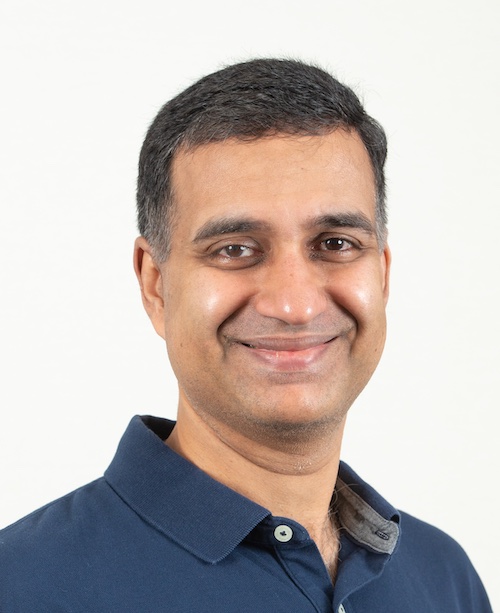
The IETF has kicked off efforts to standardize preferences for how content is collected and processed for AI model development, deployment, and use. This webinar will dive into the scope, deliverables, and timelines of this important new work.
Details:
The IETF has started work to standardize the building blocks that allow for the expression of preferences about how content is collected and processed for Artificial Intelligence (AI) model development, deployment, and use. The work will be done at the newly created aipref (https://datatracker.ietf.org/wg/aipref/about/) working group. This talk will discuss the scope of the work, the expected deliverables and the timeline.
Guest Speaker:
Suresh Krishnan works as a Distinguished Engineer (Strategy, Incubation and Applications) at Cisco. He has a Bachelor’s degree in Electrical Engineering from the University of Madras in India and a Masters degree in Electrical Engineering from Concordia University in Canada. He has chaired the dna, intarea, softwire and shmoo working groups in the IETF, the mobopts research group in the IRTF and has authored more than 40 RFCs across multiple IETF areas. He is a member of the Internet Architecture Board. He currently serves as a chair for the bpf(INT) and aipref(WIT) working groups. He has served as IETF Internet Area Director from 2016-2020.