
While large-scale, fault-tolerant quantum computers are still in development, today’s noisy intermediate-scale quantum (NISQ) devices and quantum annealers are already being applied to real-world problems. One of the most promising areas is combinatorial optimization—complex challenges such as supply chain optimization, portfolio management, drug discovery, and scheduling. These problems grow exponentially in complexity and often overwhelm classical systems.
Companies like D-Wave Systems are delivering solutions using quantum annealing, with deployments across logistics, manufacturing, biotech, and traffic optimization. Hybrid quantum-classical approaches are enabling near-term value while the technology continues to mature.
This session highlights practical applications, current limitations, and how organizations can begin experimenting with quantum computing today.

Dr. Shahar Keinan is the Chief Executive Officer and co-founder of POLARISqb, a pioneering company applying quantum computing and quantum-inspired technologies to accelerate pharmaceutical discovery. A recognized leader in computational chemistry and molecular design, she has spent more than two decades advancing the use of high-performance computing, artificial intelligence, and quantum methods to transform how novel therapeutics are identified and optimized. Prior to leading POLARISqb, Dr. Keinan served as Chief Scientific Officer of Cloud Pharmaceuticals and held research positions at Duke University, Northwestern University, and the University of North Carolina at Chapel Hill. She earned her Ph.D. in Theoretical Chemistry from The Hebrew University of Jerusalem and has authored more than 50 peer-reviewed scientific publications while contributing to numerous patents in computational drug discovery.
Dr. Keinan is an internationally recognized speaker on the intersection of quantum computing, artificial intelligence, and life sciences, with a particular focus on accelerating the discovery of next-generation medicines. Under her leadership, POLARISqb has demonstrated how quantum-enabled approaches can significantly reduce the time and cost associated with early-stage drug development while expanding the search for novel therapeutic compounds. Her work continues to bridge fundamental scientific research with commercial innovation, positioning quantum technologies as a practical tool for addressing some of the most challenging problems in healthcare and precision medicine.
The NIST National Cybersecurity Center of Excellence (NCCoE) has established a Migration to Post-Quantum Cryptography project focused on supporting the adoption of PQC standards. This effort includes two major workstreams:
- Cryptographic Visibility and Risk Management – building comprehensive cryptographic inventories to guide migration strategies
- Interoperability and Benchmarking – supporting vendors and organizations implementing PQC algorithms
As organizations assess the threat of a cryptanalytic relevant quantum computer (CRQC), NIST has defined structured phases for PQC migration, along with practical guidance and FAQs to support adoption.
This session provides a roadmap for organizations to begin their PQC transition, grounded in real-world testing and collaboration with industry and government stakeholders.
Bill Newhouse is a Cybersecurity Engineer at the National Institute of Standards and Technology (NIST) and a Project Lead at the National Cybersecurity Center of Excellence (NCCoE), where he works with industry, government, and academia to accelerate the adoption of practical, standards-based cybersecurity solutions. He currently leads major initiatives focused on migration to post-quantum cryptography (PQC) and data classification, helping organizations address the operational challenges of deploying next-generation cryptographic technologies. Through the NCCoE’s collaborative model, he has led the development of numerous NIST SP 1800 practice guides that demonstrate real-world cybersecurity reference architectures using commercially available technologies.
Over a federal career spanning more than four decades, Bill has made significant contributions to U.S. cybersecurity policy, research, and workforce development.
OpenSSL plays a central role in securing internet communications, making it a critical platform for integrating PQC into real-world systems. As PQC algorithms move toward standardization, support for hybrid and quantum-resistant key exchange and signatures is emerging within OpenSSL and related libraries.
This session explores how PQC is being incorporated into OpenSSL, including provider-based architectures, integration with external libraries such as liboqs, and support for hybrid TLS handshakes.
Attendees will gain practical insight into configuring and testing PQC-enabled OpenSSL environments, including enabling new cipher suites, experimenting with hybrid key exchange groups, and evaluating performance impacts. The session also addresses interoperability, backward compatibility, and deployment challenges.

Rich Salz is a highly respected Internet security architect, software engineer, and standards contributor with decades of experience in applied cryptography, secure communications, and large-scale Internet infrastructure. He has held senior technical roles at Akamai Technologies, IBM, and DataPower, where he helped design and implement security products used across enterprise and Internet environments. Rich is widely recognized for his long-standing contributions to OpenSSL, one of the world’s most widely deployed cryptographic libraries, and has played an important role in advancing secure protocol implementations and operational security practices.
In addition to his industry work, Rich has been an active leader within the Internet Engineering Task Force (IETF), contributing to the development and deployment of Internet security standards for more than two decades. He has participated extensively in the TLS community, served as co-chair of the ACME Working Group (the protocol behind Let’s Encrypt), and has contributed to numerous RFCs and security reviews. Known for bridging standards development with real-world implementation, he brings deep expertise in cryptography, Internet protocols, and the operational challenges of deploying security technologies at Internet scale.
This talk will give an overview of post-quantum encryption and digital signature primitives recently standardized by NIST to which a lot of governments and organizations are currently transitioning. The session will also give a brief description of additional algorithms that are currently in the pipeline at NIST and talk about what kind of challenges one faces when trying to migrate more complex protocols to quantum-safe.
Dr. Vadim Lyubashevsky is a Principal Research Scientist and manager of the Foundational Cryptography group at IBM Research in Zurich, where he has worked since 2015. Prior to this, he was a researcher in the cryptography group at the École Normale Supérieure in Paris, and before that, a post doc in the Foundations of Computing group at Tel Aviv University. He received his Ph.D. from the University of California, San Diego in 2008.
His main research focus is on designing efficient quantum-safe cryptographic protocols based on the hardness of lattice problems. He has worked on the foundations of practical lattice encryption, digital signatures, and is currently interested in zero knowledge proofs and real-world privacy preserving primitives. A lot of his research has been funded by the ERC (European Research Commission) starting and consolidator grants, and some past works have received IACR Test-of-Time awards at Asiacrypt 2024 and Eurocrypt 2025. He co-led the CRYSTALS team which produced the CRYSTALS-Kyber (ML-KEM) and the CRYSTALS-Dilithium (ML-DSA) NIST standards for post-quantum encryption and digital signatures.
Modern digital security depends on cryptographic systems like RSA and elliptic curve cryptography, which rely on the computational difficulty of problems such as integer factorization and discrete logarithms. Quantum computers fundamentally change this equation. Algorithms like Shor’s algorithm could enable sufficiently powerful quantum machines to break these widely used encryption schemes, putting sensitive data, communications, and critical infrastructure at risk. Even before large-scale quantum computers exist, the “harvest now, decrypt later” threat is already driving urgency across governments and industries.
Post-quantum cryptography (PQC) is the response to this challenge. PQC refers to new cryptographic algorithms designed to be secure against both classical and quantum attacks, while remaining deployable on today’s systems. Standardization efforts led by organizations such as NIST and the IETF are shaping how these algorithms are adopted in real-world protocols.
In particular, hybrid approaches—such as hybrid TLS that combine classical encryption with PQC algorithms—are emerging as a practical transition strategy, enabling organizations to deploy quantum-resistant protections without sacrificing compatibility.
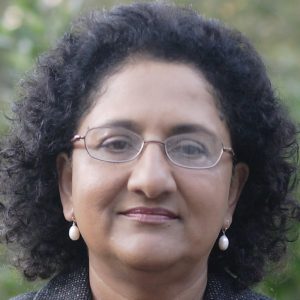
Nalini Elkins is a Trustee of the Industry Network Technology Council. She is also the CTO and co-founder of Outside the Stacks, Inc. Nalini is a recognized leader in the field of computer performance measurement and analysis. In addition to being an experienced software product designer, developer, and planner, she is a formidable businesswoman. She has been the founder or co-founder of three start-ups in the high-tech arena.
Nalini started her career doing network design and monitoring for the Chevron network. She specializes in network performance analysis, measurement, monitoring, tuning, and troubleshooting of large enterprise networks. One of her specialties is training and network design for IPv6 migration for large enterprises.
At the heart of quantum technology are principles that challenge classical intuition, including superposition and entanglement. Quantum key distribution (QKD) leverages these properties to enable theoretically secure communication, where any attempt at eavesdropping can be detected. Entanglement—the phenomenon in which particles remain correlated across distance—underpins not only QKD but also future quantum networks and distributed computing architectures.
Beyond communication, quantum sensing is emerging as one of the most mature and transformative applications. Quantum sensors have the potential to redefine navigation by reducing or even eliminating reliance on GPS, enabling precise positioning in environments where satellite signals are unavailable or unreliable. Looking further ahead, quantum technologies could support entirely new infrastructure paradigms, including the possibility of data centers in space, where quantum communication links and ultra-secure networks operate beyond terrestrial constraints.
As these capabilities evolve, the need for interoperability, security, and performance standards becomes critical, requiring coordination across industries and international bodies to ensure scalable and trusted quantum ecosystems.

Dr. Bruno Avritzer is the quantum theory lead at Leidos and the vice-chair of the QED-C Standards and Performance Metrics technical advisory committee, and specializes in the theory of quantum communications and networked quantum devices, ranging from secure quantum communications to distributed quantum computing.
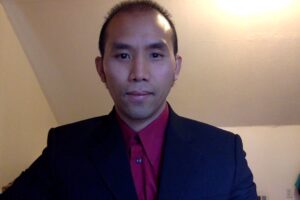
Many of the public-key cryptographic standards we use today will be vulnerable to attacks from a large-scale quantum computer. To address this threat, NIST initiated a rigorous process in 2016 to select quantum-resistant cryptographic algorithms to standardize. This talk will review this NIST PQC standardization effort, which culminated in the publication of the first set of PQC standards in August 2024, with ML-KEM, ML-DSA, and SLH-DSA. The talk will also detail the ongoing standardization of additional signature scheme(s), called “the on-ramp”, and the selection of HQC for an additional KEM standard.
Crucially, the talk will outline the necessary transition to those new standards. Migration timelines are given in NIST IR 8547, which proposes that currently approved quantum-vulnerable public-key algorithms will be disallowed after 2035. The talk will showcase the efforts of the National Cybersecurity Centre of Excellence’s Migration to PQC project, which is helping the community by tackling adoption issues, testing how different systems work together, and providing advice to speed up the global shift to secure cryptography against quantum threats.
Quynh Dang is a member of the Cryptographic Technology Group (CTG) at National Institute of Standards and Technology (NIST). He has worked in the field of applied cryptography for 20+ years. His interests include symmetric key, asymmetric key and post-quantum cryptography, and protocol security.
Bio:Abstract:

John Preuß Mattsson
Expert in cryptographic algorithms and security protocols, Ericsson
Abstract:
The mobile industry, with its unique characteristics, has been preparing for the transition to quantum-resistant cryptography for many years. As truly global standards, 4G and 5G require algorithms that are universally trusted and secure across all regions. Mobile networks are considered critical infrastructure, heavily regulated, and expected to adhere to government recommendations for migration timelines. However, performance and costs remain high priorities, which differs from national security systems. Hardware like base stations has a long lifecycle, often remaining in service for decades. 5G and 6G standards, heavily reliant on IETF standards for public-key cryptography, will introduce quantum-resistant algorithms in 2027–2028, and 6G will be quantum-resistant by design. This talk will discuss these challenges and the industry’s plans to overcome them.
Bio:
John is an expert in cryptographic algorithms and security protocols at Ericsson Research in Stockholm, Sweden. His work focuses on applied cryptography, security protocols, privacy, IoT security, post-quantum cryptography, and trade compliance. During his almost 20 years at Ericsson, he has worked with a lot of different technology areas and been active in many security standardization organizations including IETF, IRTF, 3GPP, GSMA, and NIST where he has significantly influenced cryptography, Internet, and cellular security standards. In addition to designing new protocols, John has also found significant attacks on many algorithms and protocols. John holds an MSc in engineering physics from KTH Royal Institute of Technology, Sweden, and an MSc in business administration and economics from Stockholm University.
India Internet Engineering Society (IIESoc) & Industry Network Technology Council (INTC) will be organizing the 6th iteration of Connections as a joint fully online event on Feb 5-8 2024.
Post Quantum Security track with talks from Bas Westerban and Tirumaleswar Reddy.
Dawn of the Post Quantum Internet
We are at a pivotal moment in cybersecurity. Browsers are rolling out post-quantum encryption by default to counter the store-now-decrypt-later threat. What once was the subject of futuristic tech demos, will soon become the baseline expectation for security. Encryption is only half the story. Post-quantum certificates are much more challenging to deploy. In this talk, we will take measure of the current state, and the challenges that lay ahead for the public Web and its PKI.
PQC for Engineers
I will talk about the “Post-Quantum Cryptography for Engineers” draftthat is adopted in the PQUIP WG. This document explains why engineers need to be aware of and understand post-quantum cryptography. It emphasizes the potential impact of Cryptographically Relevant Quantum Computers on current cryptographic systems and the need to transition to post-quantum algorithms to ensure long-term security.
The vision of a quantum internet is to fundamentally enhance Internet technology by enabling quantum communication between any two points on Earth. While the first realizations of small scale quantum networks are expected in the near future, scaling such networks presents immense challenges to physics, computer science and engineering. In this session, Wojciech provides a gentle introduction to quantum networking and surveys the state of the art. He proceeds to discuss key challenges for computer science in order to make such networks a reality.
Wojciech Kozlowski received his MSci degree in theoretical quantum physics from the University of Cambridge in 2012 and a DPhil degree in theoretical quantum optics and many-body systems from the University of Oxford in 2017. He is currently a postdoctoral researcher at QuTech, an advanced research institute for quantum computing and networking in the Netherlands.
After his doctoral thesis on the competition between weak quantum measurement and many-body dynamics, Wojciech left academia to work as a software engineer in the network protocols unit at Metaswitch Networks in London, UK. As of 2019, he is combining his new expertise in networking technologies with his prior research experience developing a network architecture for the quantum internet.